

Editing is a whole other beast – something I’m knee deep in at the moment. It’s a huge undertaking, especially because my first drafts a rough. Like really rough. But, I want to talk about first drafts, because although editing can a monster of a task, I always find the writing the first draft to be emotionally draining and frightening – more so than the edit in some ways.
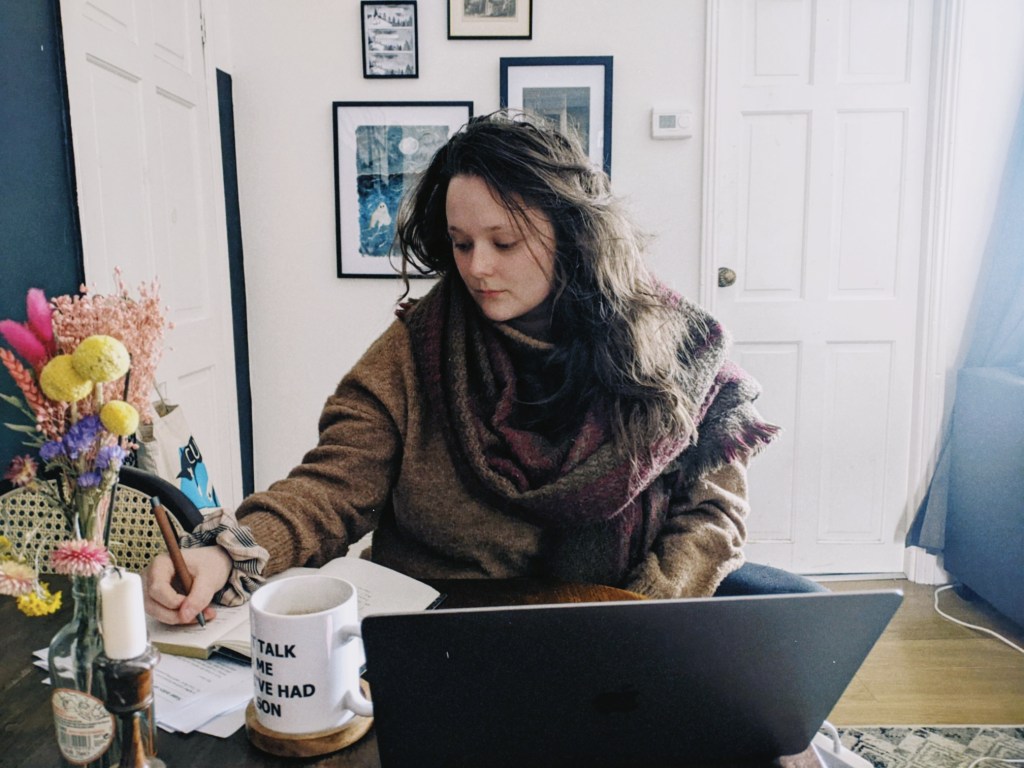
Personally, I find the fear of the blank page excruciating at times. It totally paralyses me. Now, every writer is different and some thrive on the emptiness of their first page, desperate to fill it with words. But not me. I want to talk through the process of working with a child’s draft and how I used bitesize writing to make huge progress on it within just a couple of weeks.
- Don’t wait for anything. When I say this, what I mean don’t do that thing where you’re like: Oh, I’ll start fresh, on a fresh week, next Monday. Just start now. I can’t count the amount of times I pushed things back or waited for NaNoWriMo events only to fall at the hurdle and shame myself into writing… well, nothing at all.
- Set yourself achievable, bitesize targets and try to write every day (especially if you’re a planner). If you know exactly what you need to write, eat the frog and attach it head on – even if what you write isn’t that good. It’s not supposed to be. The first draft is a playground. A place to explore. Find the roots of the project and study them. If you set yourself achievable goals, you won’t shame yourself if you don’t hit the targets. Being realistic is what gives me a huge sense of the crafting being rewarding during these stages. And I don’t feel a sense of dread (because secretly I know I won’t meet the targets). I feel excited to write my chapters for any given day, knowing I’ll hit my targets.
- Write everywhere. You don’t have to write just in your word document at your desk. I write the majority of my first drafts on my phone – and I write while I’m commuting. On breaks. While I’m doing chores or watching TV at home. Don’t confine yourself to such a strict way of doing things. Writing should be a fluid at active act – not stagnant.
- If you experience burn out, take a break or slow down. Sometimes, it is okay not to write today, as long as tomorrow, you make a promise to eat the frog and start writing again.


If you want to know more about my Arts Council journey, please follow me on Twitter and Instagram for blog updates! I’ll be writing a monthly blog about the things I learn on my journey.
I’m exceptionally grateful to Arts Council England, who awarded me a DYCP grant in early ’23. This grant has enabled me to take time to develop my creative practice, my voice and my craft. If you’re interested in applying for a grant, please see the ACE website for more information.

 lucy rose (writer)
Leave a comment