
First drafts are something I’ve always struggled without throughout my writing career. Whether it’s with the blank page of a screenplay, short story, or manuscript, They can be intimidating documents.
Having received the DYCP grant to develop my literary craft, I really wanted to focus in on how I tackle my first drafts – and specifically the practical act of putting together a story on a large scale beyond the nuances of voice and the broad strokes of a story outline.

Known for being diabolically painful, first drafts are true to their reputation. Everything is messy and raw, but I wanted to use this time to enjoy and embrace that process. And to begin that, I took a piece of advice from January’s reading recommendations.
The first draft is the child’s draft, where you let it all pour out and then let it romp all over the place, knowing that no one is going to see it and that you can shape it later. You just let this childlike part of you channel whatever voices and visions come through and onto the page.
Anne Lamott from Bird by Bird
Exploring first drafts and how I write them.
I wanted to use part of my grant money to buy myself some time. Time away from full time commitments so I could focus on getting my ‘child’s draft down’. I wanted to feel comfortable being raw – and not boxed in. I think part of embracing that process was learning your own approach and instincts inside and out.
There are lots of writers out there who tell you how you should be doing it. For years, I’ve changed my own way of working to fit what’s ‘right’ or what’s expected of me, but for the first time in my writing career, with this project, I wanted to embrace the chaos.
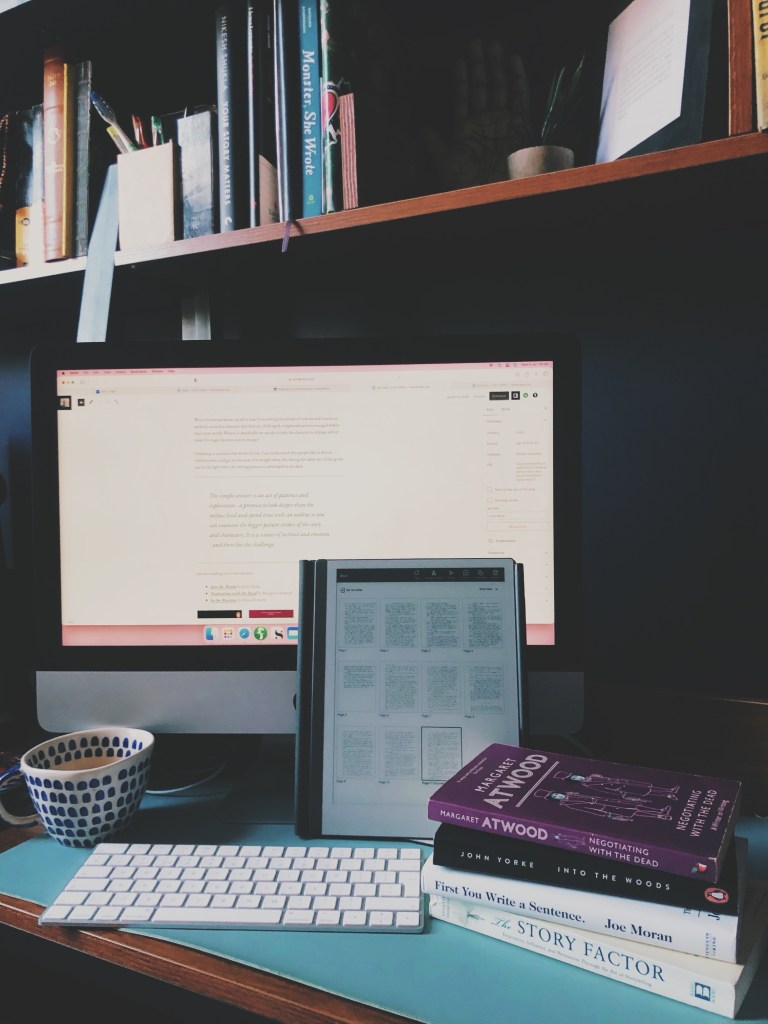
So, this is how I wrote my first draft.
The general rule of thumb is get your first down as quickly as you can and don’t look back edit. For this novel, I kept myself at a limit of 1000-1500 words a day. For me, it’s important to have dreaming time, moments in the day I can relax and turn my brain off. Explore. Be imaginative. All those things, without the pressure of get 3000 words down, pronto!
Although the urge to type everything out and do everything in a nice and calm uniform way is what I know I should do, this time, I decided to embrace my chaotic instincts and used multiple methods to getting the actual writing done.
- Method one: your standard writing straight into Scrivener. Ignoring the spelling, but following the strict outline I developed in early January.
- Method two: handwriting on my Remarkable tablet and then converting my words into electronic text. This has been a particular life saver when I’ve felt overwhelmed by the digital world and need a quiet place to escape to because it’s screen isn’t backlit and there are no apps – only a place to write with an easy option to convert my handwritten work into text.
- Method three: another digital brain dump, but this time with the amazing focus app from digital creator and writer, Eve Harms. You can download Stimuwrite for free.
- Writing out of order and skipping chapters I’m not ready to write. I’ve realised it’s okay to write out of order. When you wake up and want to write, you shouldn’t force yourself to write something you’re just not feeling that day. You should write moods, atmospheres, and themes that you’re feeling motivated by and passionate about.
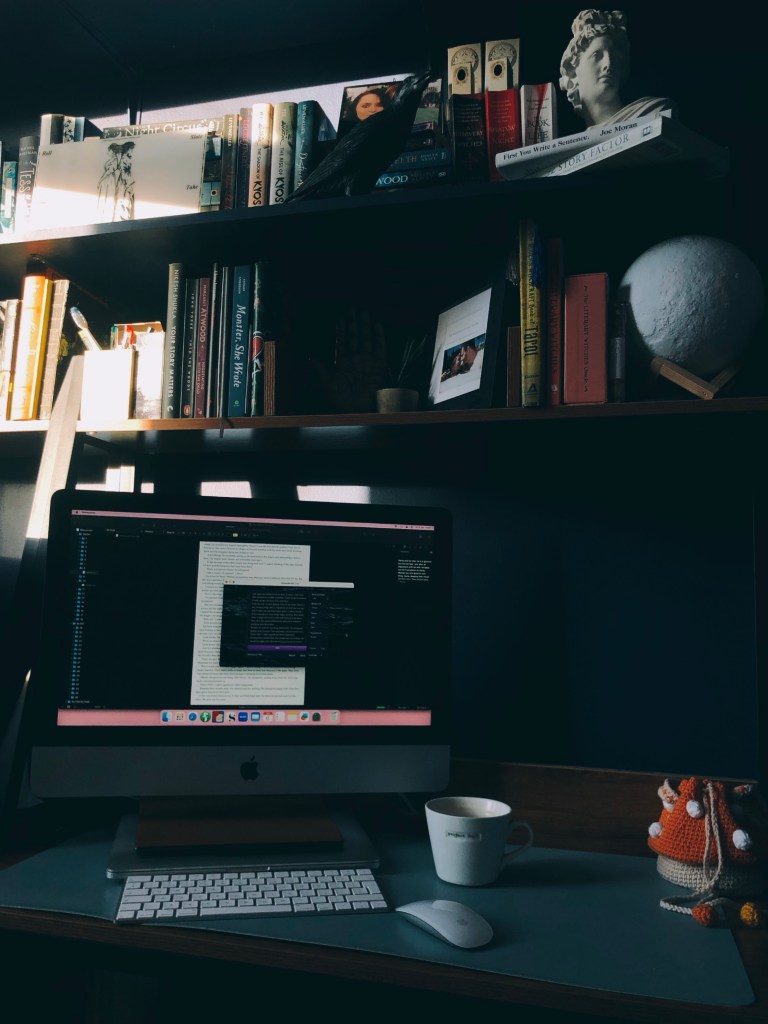
In my first writing session my current WIP, I worked for about an hour in five-minute stints, taking a brief pause to note my progress as every five minutes passed. Working at such a quick pace kept my slowly dwindling attention sharp. It kept my brain stimulated. Each stint became a puzzle to solve.
By design, first drafts are supposed to be imperfect and messy. Some will be messier than others. Come more difficult that others. Be more disorganised. What actually matters is that you have the story down in some form: a beginning, a middle, and an ending.
March reading recommendations:
First You Write a Sentence by Joe Moran / The Story Factor by Annette Simmons / The Art of Dramatic Writing by Lajos Egri
- First You Write a Sentence by Joe Moran
- The Story Factor by Annette Simmons
- The Art of Dramatic Writing by Lajos Egri


If you want to know more about my Arts Council journey, please follow me on Twitter and Instagram for blog updates! I’ll be writing a monthly blog about the things I learn on my journey. You can see the Pinterest board for my project here and my Spotify playlist here.
I’m exceptionally grateful to Arts Council England, who awarded me a DYCP grant in early ’23. This grant has enabled me to take time to develop my creative practice, my voice and my craft. If you’re interested in applying for a grant, please see the ACE website for more information.

 lucy rose (writer)
Leave a comment